lördag 18 februari 2012

Recipe: Cake or Death?

The other day, I got the desperate urge to bake. Everybody handles stress differently, and for me, the best way to wind down is to muck about with eggs, butter and flour. I have no idea why, but I'm sure it's a better option than, say, turning to recreational drugs.

As Eddie Izzard would put it, cake or death?

Because I am also incapable of following a recipe without 'improving' it (the same goes for sewing patterns), I quickly invented a variety on what we call 'sugar cake' (which I suppose should be translated as 'sponge cake').

Ingredients

2 eggs
2 dl sugar (≈ 0.8 cups)
3 3/4 dl flour ( ≈ 1.5 cups)
2 tsp baking powder
50 gr melted butter + a little for the cake mould
1 dl milk (≈ 0.4 cups)
2 tsp vanilla sugar
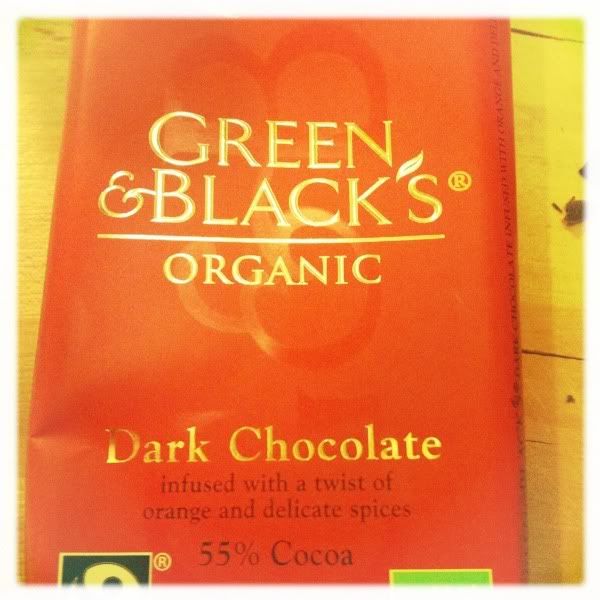
100 gr Green & Black's Organic Chocolate with orange and spices, chopped
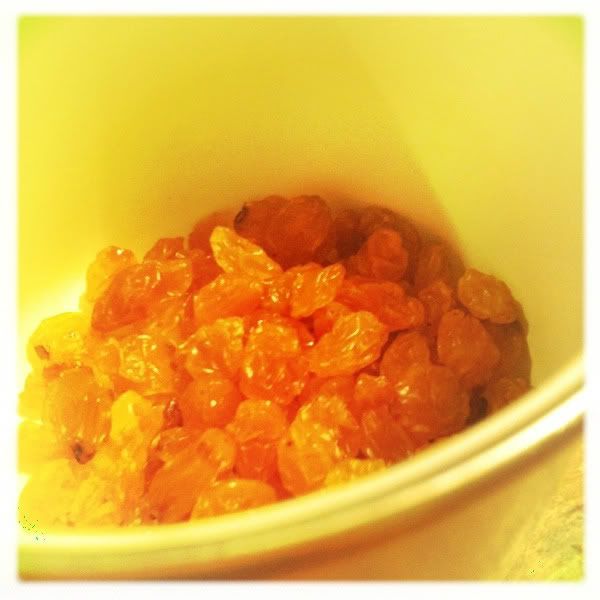
1 handful of sultanas  
Breadcrumbs

Prepare the cake mould with butter and bread crumbs.

Whisk eggs and sugar together until fluffy. Blend the flour, the baking powder and the vanilla sugar together (if you use vanilla extract, add it to the eggs and sugar before whisking it together instead). Mix the flour mix with the egg mix and add the melted butter, the chocolate and the sultanas. Try not to stir too much as that may cause the cake to sag and/or acquire a sad, gum-like quality.

Pour the mix into the cake mould and set in the oven at 175°C (between 325 and 350°F) for about 40 min.

When it's done, wait a few minutes and then turn the mould upside down. If needed, carefully pry the cake loose with a knife. Then let it cool under the mould (but honestly, not altogether because it's really good when still slightly warm because the chocolate is all runny and yummy).


fredag 17 februari 2012

Freedom of Choice or Freedom from Choice?

Quite often, the simplicity of life 'back then', is contrasted with the complexity of the world today. Before 1955, it's more or less alleged, people trudged on; good, simple souls who worked hard and slept well and to whom the world order was easily discernable and understandable.

This seems to be what draws some people to embrace a 'vintage' or 'retro' lifestyle. For me, however, that's not so. I don't think life 'back then' was simple. Absolutely not.

On the contrary, in the time between the wars the world wrestled with enormous questions - can Capitalism survive? Is Democracy desirable? How do we cope in a world that is filled with possibilites; a suddenly urban society where women wear short skirts and demand equal rights to pay and vote, where people are suddenly only a telephone call and a train ride away, where information in the shape of papers, pamphlets, books etc. are suddenly swelling to hitherto unknown proportions? 'Breathing', Beatrice Webb wrote in 1932, 'from infancy an up, an atmosphere of morbid sexuality and alcoholism, furtive larceny and unashamed mendacity [...] the average man is, mentally as well as physically, poisoned.'*

That's how the world looked to the people living inside it. It wasn't simple; it was a time of upheaval of the social and political order where men struggled to understand what was going on. The transitions we have experienced since are in no way greater than those experienced between 1870 and 1939. Looking back, it looks simpler because distance tends to blur out the things that didn't happen and so it seems like the choices that were made weren't actually choices but just the natural flow of events.

The patterns that are obscure when we stand close to an object emerge when we back away, like a gouache painting. But honestly, if things had been so 'simple' back then, would the world have changed the way it has? No, that change is caused by the fact that the world in the Golden Era wasn't 'simple' and that suddenly all truths hitherto known to man were up for questioning.

Personally, I don't think uncertainty was ever greater than in this period - and that's part of why I love it. It was so full of possibilities and visions and promises of a grander future that never came. Instead, we're stuck with this world, which chafes on us, and we can't even explain why. We've driven the world to the bring of the Apocalypse through our desperate attempts to consume away the increasing hollowness inside and yet, the void is ever growing.

To put it simple: the Western world is eating cake and wondering why it's still hungry.


*Overy, R. J.,  The morbid age: Britain and the crisis of civilization, Penguin, London, 2010[2009], p. 70

torsdag 16 februari 2012

Great Retro-looking Perfume

The other day I found this great bottle at H&M - doesn't it look like it belongs on the dressing table of some 20th century movie star?

It smells good too. I'm really bad at identifying scents, but there's plenty of vanilla in it, with flowery top notes. It doesn't at all smell 'cheap' the way H&Ms scents often do.

A find for only SEK 99!

onsdag 15 februari 2012

Fairly Beautiful Clothes

I recently came across People Tree through a post on Husmorsskolan and immediately fell in love. They have some absolutely gorgeous styles that should appeal to lovers of vintage fashion. There are lots of things that look decidedly '40s and '50s, including a calf length circle skirt.

And just look at this lovely coat:


or this adorable skirt with teacups:


What more is, People Tree makes clothes that meet the Fair Trade principles set out by WFTO (World Fair Trade Organisation), and that are produced in an ecologically sound way - according to the website all of their cotton is certified organic and Fairtrade (like the two samples above) and all their clothes are dyed using safe and natural dyes. 


Now, I haven't bought anything from them yet, but I very well might. It's the perfect combination of things I feel passionately about - good clothes, organically produced, with a little justice and fairness thrown in to top it off.

söndag 12 februari 2012

Recipe: Chocolate Pudding


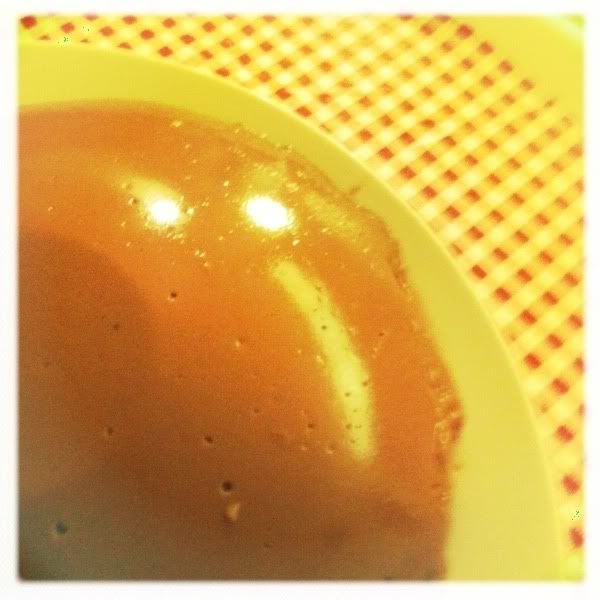
One of the most classic Swedish desserts is chocolate pudding. It's basically a chocolate-flavoured milk jelly and was one of my favourites as a child. For some reason, it's going out of use and when it is made, it is usually made from a mix. I think that's a great pity - it's yummy, easy to make and contains considerable less sugar and fat than many 'modern' desserts.

I consider this a 'winter dessert', because it doesn't require fresh fruit or berries and it needs to cool in a chilly environment - so much better to put it outside in the snow than in the fridge!


I got my favourite recipe for it from Husmorsskolan and I've made it several times, always with excellent results. I've tried to translate it into English and hope it makes sense!

6 dl / 2.5 cups milk
5 tbsp cornstarch (Maizena)
3 tbsp sugar
3 tbsp cocoa
1 egg
vanilla extract/vanilla sugar to taste

Mix all the ingredients and whisk them together. Heat slowly while stirring and allow to simmer until the cream is really thick.

Let cool a little, and pour it into a bowl/mould or portions-sized cups. Make sure you rinse them in water before you pour the cream in – it makes the pudding come out much more easily.

It needs to cool off and be chilled to set. You can put it in the fridge or, like I said, outside if it's cold. How long it takes depends on the temperature. One hour is sufficient if it's really cold outside, but in the fridge, you need to give it 3-4 hours.

Tip it out and serve as is or with whipped cream. It looks best if you have a fancy old-fashioned pudding mould of course, but it can be rather nice to serve individual little puddings too.

The texture is somewhere between custard and jelly. Very yummy!

lördag 11 februari 2012

How I got my nose

My father's grandmother was one hell of a woman. She wasn't even 5 ft tall and bow-legged due to malnutrition as a child and had a distinctly upturned nose. I have that too. In fact, it's part of our family lore that the first thing my mother said when she saw me was "God, she has Great Gran's nose!" It's called a 'norrköpingsnäsa' in Swedish, very aptly, since my great grandmother actually was from the town of Norrköping.

She was born in 1901 and grew up mostly fatherless, because her father took the family savings and went off to America to build a better life. The idea was that he would send for his wife and daughter as soon as he got settled. Instead, he vanished without a trace. We still don't know if he died or just decided to start anew, but the latter seems rather more likely, given the circumstances and human nature.

At 17, she left the small town behind and moved to Stockholm. Exactly what went on there, I don't know, but as she never talked of it beyond the need to repent for her youthful sins, I suspect it was something interesting. At some point, she worked at Berns Salonger, which stills looks more or less the same as it did then. She also got engaged to the illegitimate son of a French variety singer and had a daughter with him. They never married and at some point the gentleman disappeared and remained MIA until the '60s when my father found him, surrounded by a new family.

When her labour started, she didn't have enough money for a tram, so she walked straight across Stockholm, an hour long walk or so, to the women's hospital. Unfortunately, it turned out she couldn't support my grandmother and had to put her in foster home. It took years before they were reunited, and honestly, her child rearing methods were a little unorthodox. In the '50s, she had a house right on the waterfront so she'd tether my father with a rope so he wouldn't drown when he was visiting, rather than just keeping an eye on him. He's told me he used to beg: "I'm going to be so good, so good, just don't tie me up!" to no avail.

In the '30s and '40s, she worked as a 'kalaskokerska'. It's an expression long gone, but it means a woman who comes in to cook for large dinners or parties. Today, we'd likely say she was a caterer, but that just doesn't convey the same image of a short. stout woman who could whip a bread dough and roll a few hundred meatballs without blinking. Herself, she'd probably have considered 'caterer' silly faff - she was a woman with little time for pretentions.

And she was a gutsy lady. Since her job often meant late nights, people would ask her if she wasn't afraid of being molested when she walked home. "Nah, they'll let me go when daylight breaks', she'd say, with an 'and they can see what I look like' implied but not spoken.

She was also a gold mine of bawdy expressions. In Swedish, we tend to have a lot of suggestive sayings along the lines of '...he/she said when he/she...' and my grandmother knew more of those than anyone I ever met. Some I don't even understand, but as they usually contain references to sex and bodily functions, they're pretty still funny!

One of her expressions that I especially love is about worrying about being indecent or people seeing you undressed. She'd say: 'Kan de se nåt mer än Gud har skapa' låt dem stå där och gapa' - meaning something like 'If they can see something more than God created, let them marvel.' I love that, because to me it conveys beautifully that there's nothing shameful about the human body.

By the time I was born, she was already old beyond her years, worn out from a life of hard work and misfortunes, but would still spout her funny expressions and I remember her fondly. I also have some of her recipes, passed down through my mother, but sadly, most of them are now lost in time.

It's very strange to look in the mirror and realise that I actually look a lot like her, and that her fate could easily have been mine in another time and place. I'm far from sure I'd have handled myself as well, though.

Related Posts Plugin for WordPress, Blogger...